


Small Size
Zero Compromise
The Mindray BeneHeart L Series
automated external defibrillators, up to 360J escalating energy, five-second re-shocks and real-time CPR coaching, available in Australia.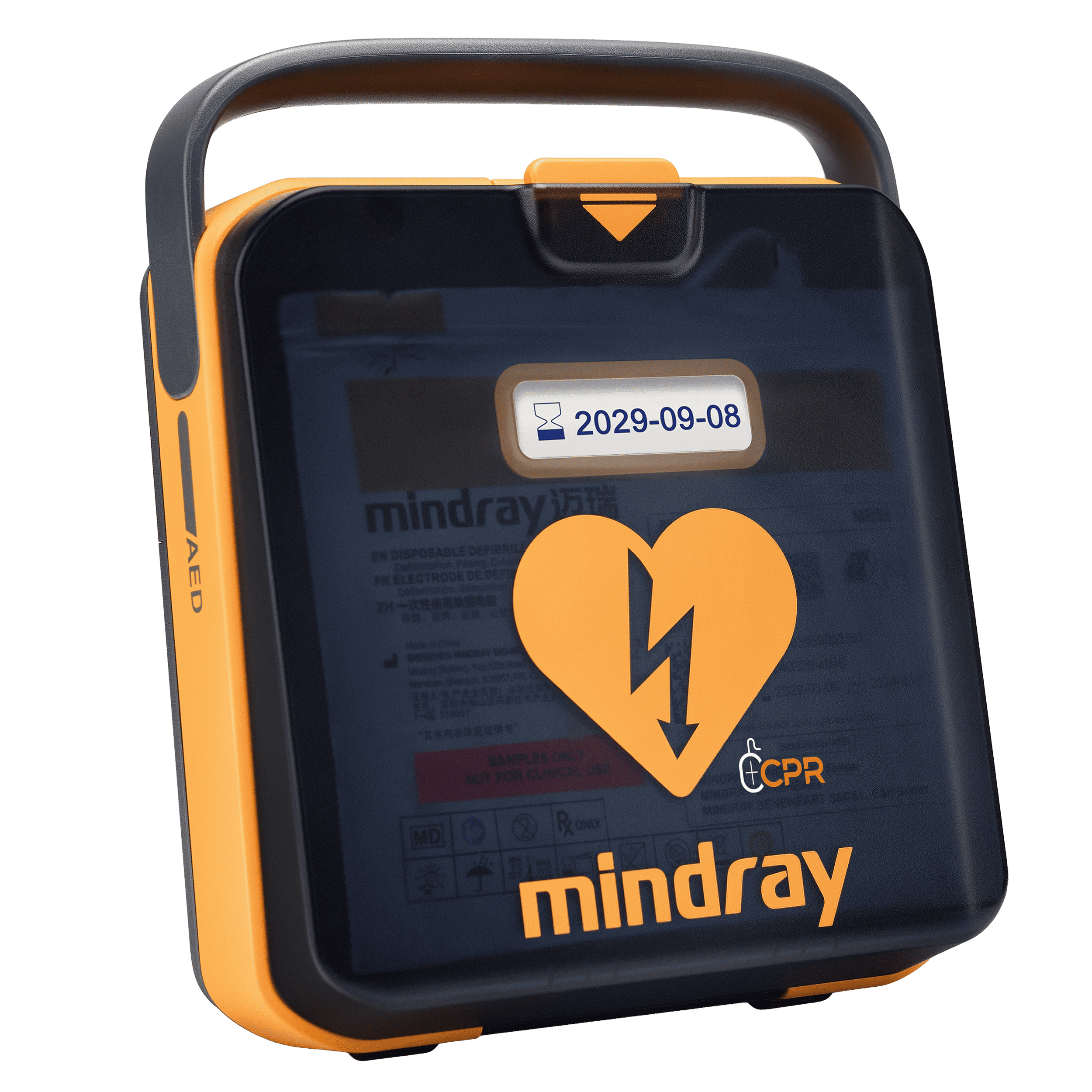
Smaller was the hard part.
Powerful was non-negotiable.
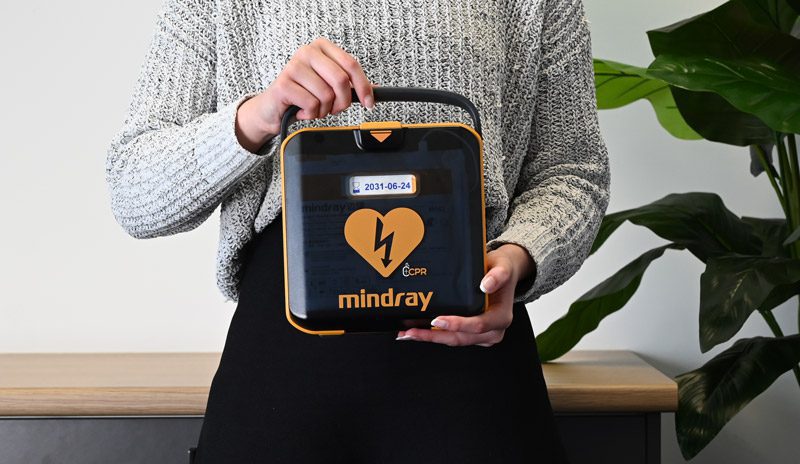
Miniaturisation here is a system-level design, not size scaling. Energy density, thermal management and safe spacing were re-engineered so a device this compact still delivers the highest defibrillation energy in its class — up to 360J.1
Every second that's paused
is a second off survival.
The ERC notes each minute of delay to defibrillation is associated with a higher chance of failing to terminate VF and lower survival to discharge.4 QShock Plus pre-charges during CPR, so after every cycle a shock can land in as little as five seconds.2
Time from the CPR metronome stopping to the next shock, after each CPR cycle. Comparative figures per Mindray's published QShock Plus timing analysis.2
More energy where it counts.
A CPR coach where it’s needed.
Biphasic Truncated Exponential waveform
High-energy biphasic defibrillation reaches more patients with a high defibrillation threshold.1 In out-of-hospital cardiac arrest, an escalating-energy strategy showed higher conversion and a more organised rhythm after multiple shocks than fixed energy.5
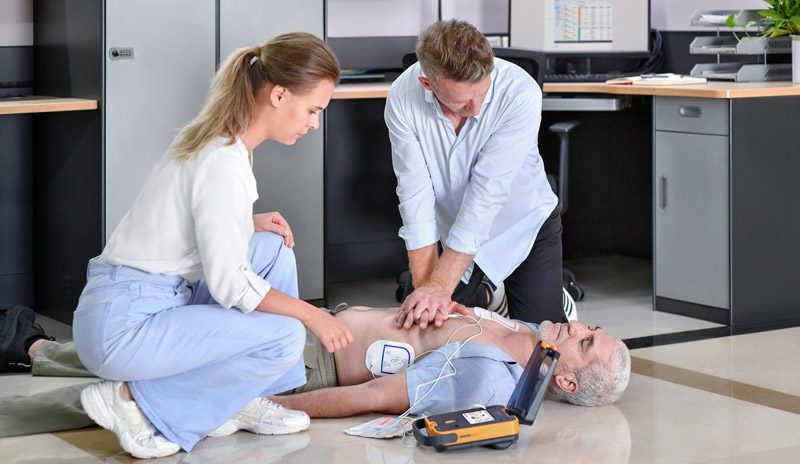
CPR Coach + ResQNavi™
Real-time compression feedback
Live depth and rate guidance (5–6 cm depth, 100–120/min) with intelligent rescue navigation that adapts to skilled and unskilled rescuers alike.1
It talks you through it.
Skilled or not.
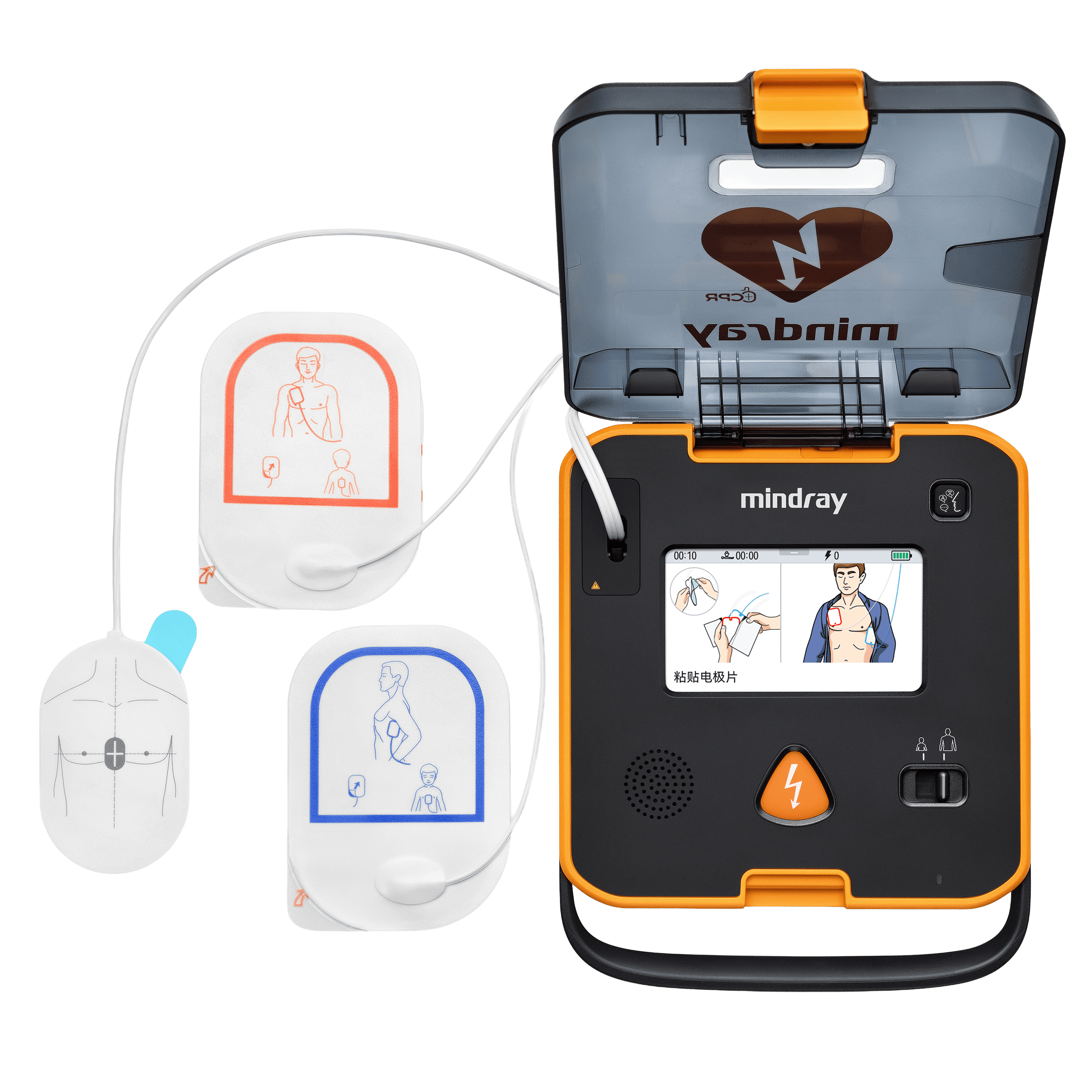
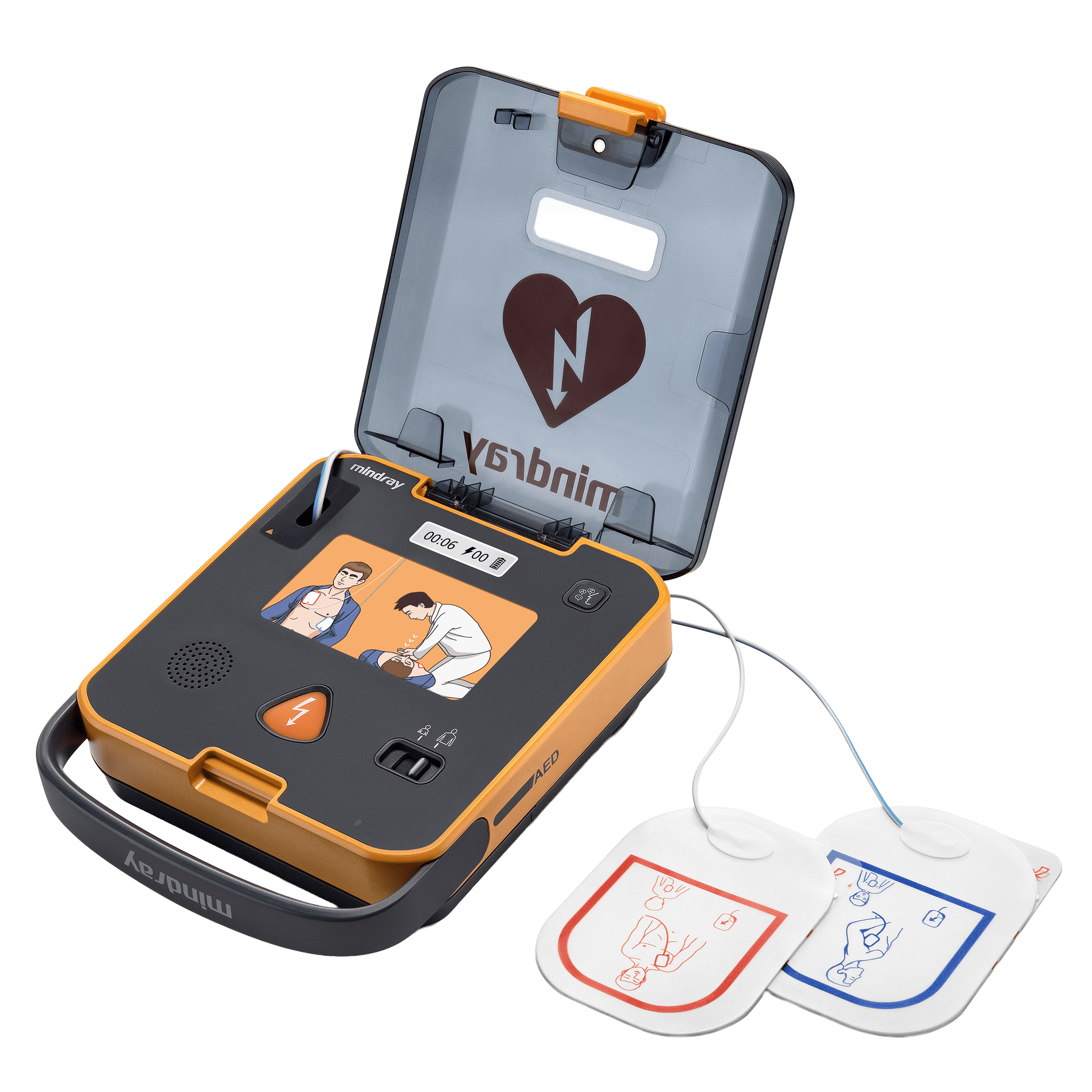
A bright colour screen pairs animation with voice prompts and a real-time metronome. Open the lid and it powers on, then walks any rescuer through every step, from pads to shock.
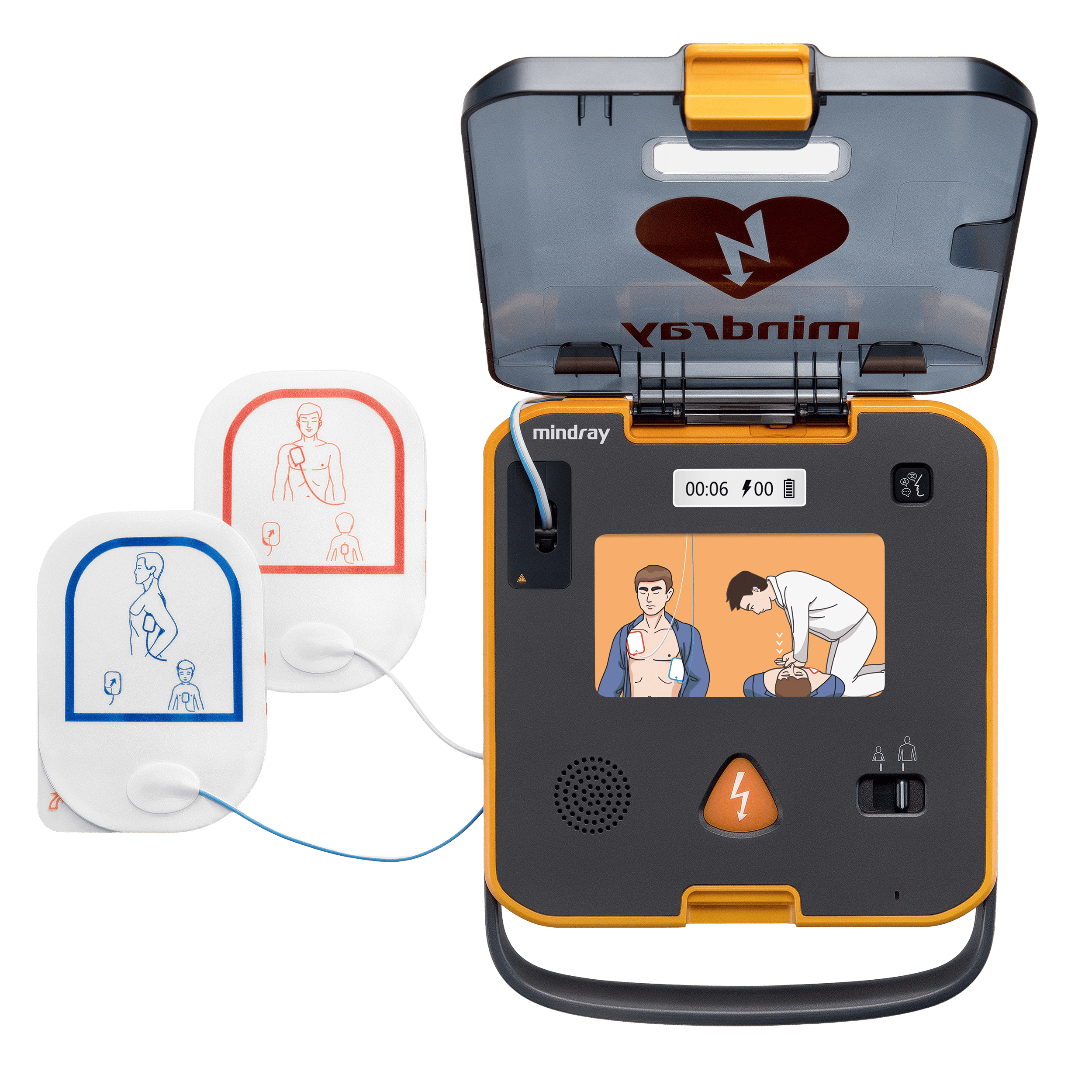
Built for the person
who never trained for this.
Most rescuers are ordinary people having the worst moment of someone else’s life handed to them. The L Series is designed for exactly that person — clear, calm and impossible to get lost in.
Ready in the field.
Managed from anywhere.
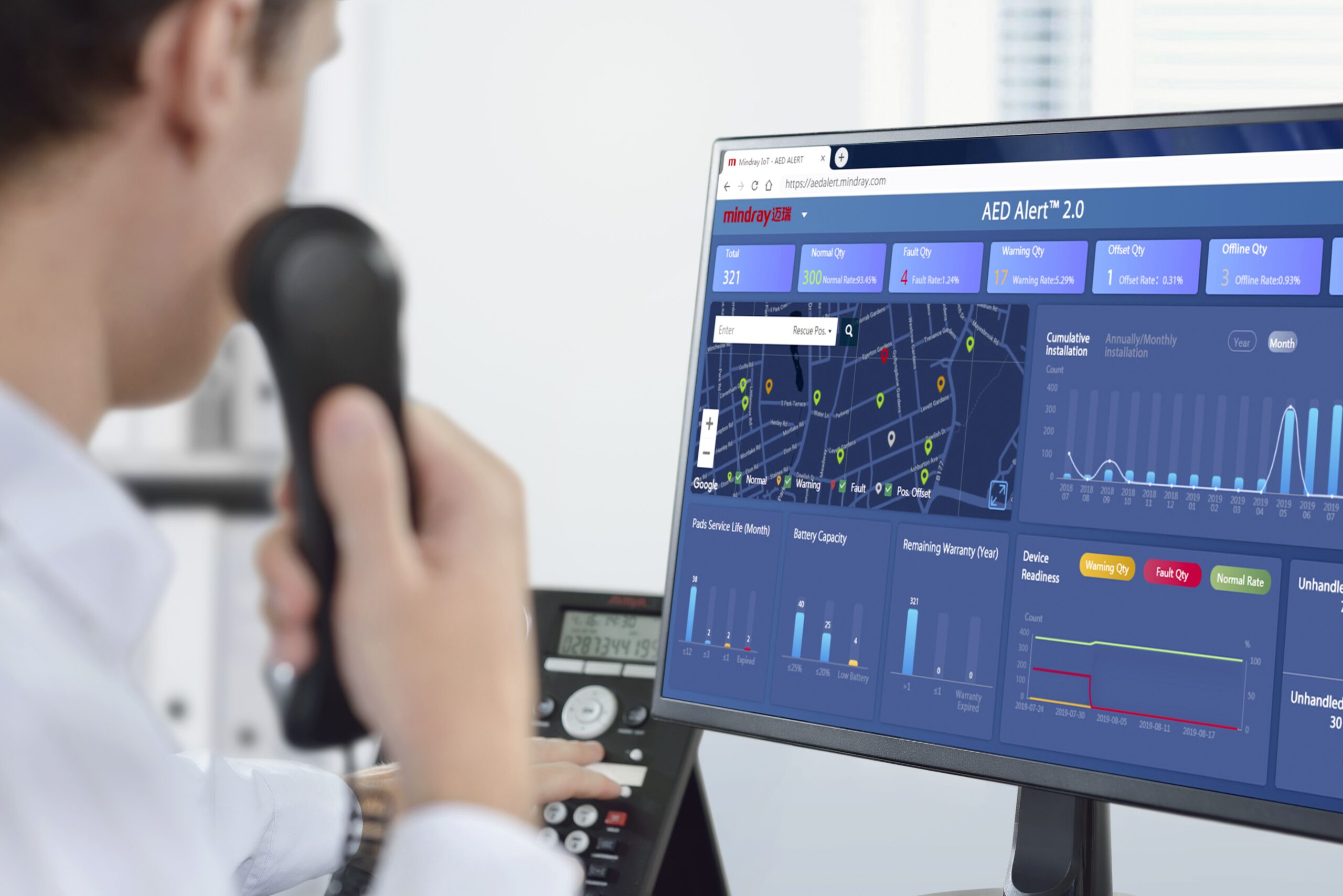
Durability and oversight weren’t traded for size either. The L Series survives harsh environments and reports its own readiness through AED-Alert 2.0 — battery, pads, location and self-test, across an entire fleet.
Choose your display.
- Display 1.96" LCD
- Capacity 400 shocks @200J
- Operating time ≥15 hours
- Energy up to 360J
- Guidance voice + CPR metronome
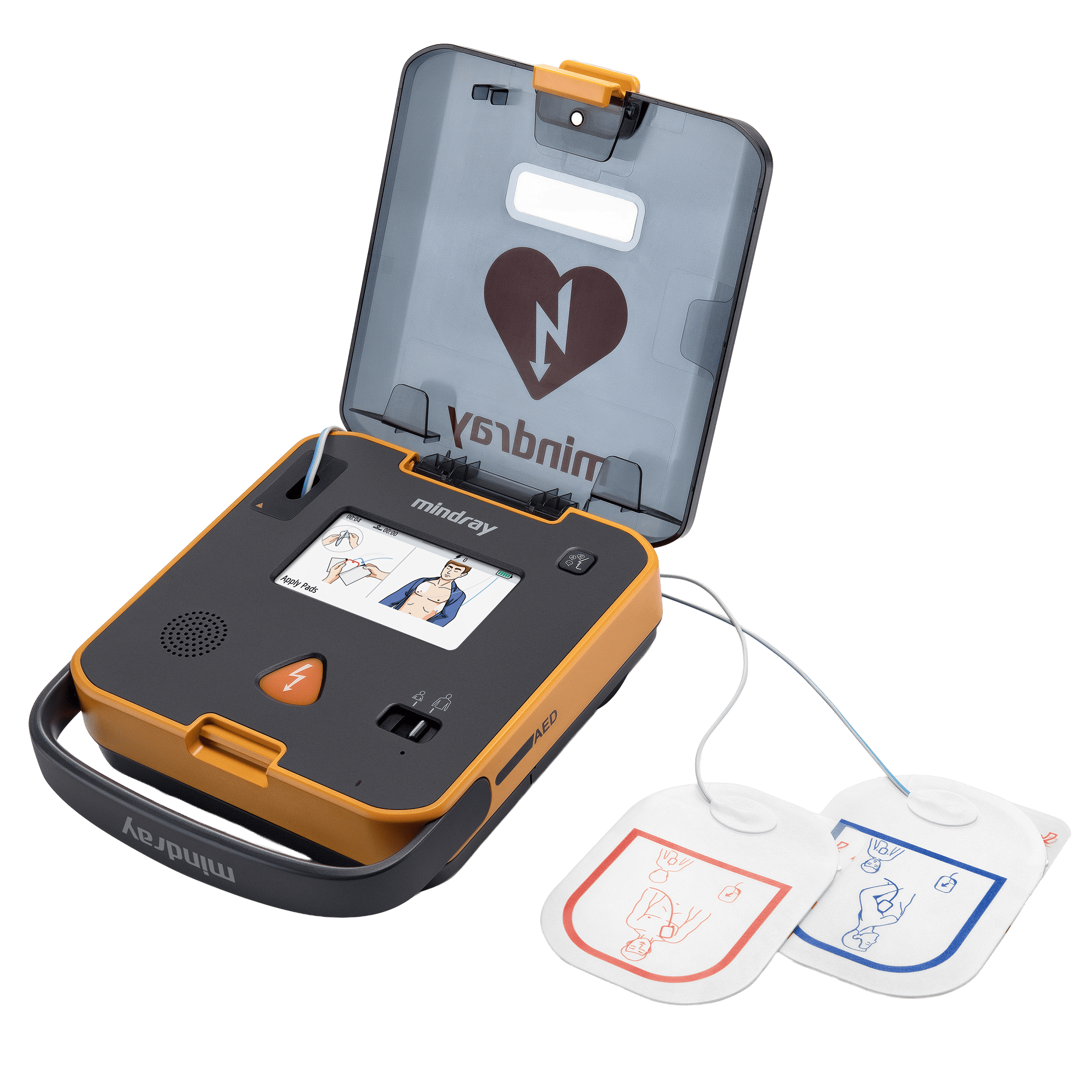
- Display 4.3" colour touch
- Capacity 350 shocks @200J
- Operating time ≥12 hours
- Energy up to 360J
- Guidance animation + voice + CPR feedback
The specifications
Everything, on the record. BeneHeart L1 / L2. All figures from the Mindray L1 / L2 datasheets.3
Nothing left out.
Zero Compromise.
The BeneHeart L Series is here through Aero Healthcare, exclusive Australian partner to Mindray.
Questions, answered.
What is the Mindray BeneHeart L Series AED?
What’s the difference between the BeneHeart L1 and L2?
How much energy does it deliver?
Can someone with no training use it?
Where can I buy it in Australia?
Sources & references
Every performance claim on this page is drawn from Mindray product documentation or the peer-reviewed and guideline sources below.
- Mindray BeneHeart L Series brochure (BeneHeart L1 / L2), Shenzhen Mindray Bio-Medical Electronics Co., Ltd., 2025. Source for 38% smaller / 22% lighter, up to 360J escalating energy, CPR Coach depth/rate guidance, ResQNavi and AED-Alert 2.0. P/N ENG-BeneHeart L1/L2-210285X8P-20251023.
- Mindray QShock™ Plus — L-series AED defibrillation technology, Shenzhen Mindray Bio-Medical Electronics Co., Ltd., 2025. Source for the five-second post-CPR re-shock and the comparative shot-cycle timing (BeneHeart L 5s vs. Company B/C 8s, Company D 11s). P/N ENG-QShock Plus-210285X2P-20251124.
- Mindray BeneHeart L1 / L2 Datasheet, Shenzhen Mindray Bio-Medical Electronics Co., Ltd., 2025. Source for 1.9 kg weight, pre-shock pause <5s, IP55, 1.5 m 6-surface drop, 5-year battery/pad standby, and all technical specifications. P/N ENG-L1/L2 Datasheet-210285X2P-20251103.
- European Resuscitation Council Guidelines 2025. On patients in a shockable rhythm, each minute of delay to defibrillation is associated with a higher probability of failure to terminate VF and lower probability of survival to discharge. Cited in the Mindray QShock Plus brochure.2
- Tang H, Wu R, Yin L, et al. Escalating vs Fixed Energy Defibrillation in Out-of-Hospital Cardiac Arrest Ventricular Fibrillation. JAMA Netw Open. 2025;8(4):e257411. doi:10.1001/jamanetworkopen.2025.7411. Source for higher conversion and more organised rhythm with escalating (360J) energy after multiple shocks.
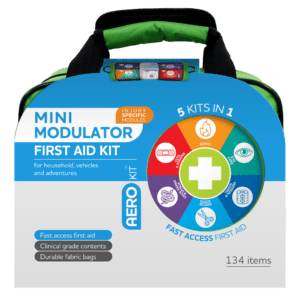 Introducing the NEW Mini Modulator - perfectly sized for taking on your next adventure!