

Raising The Standard
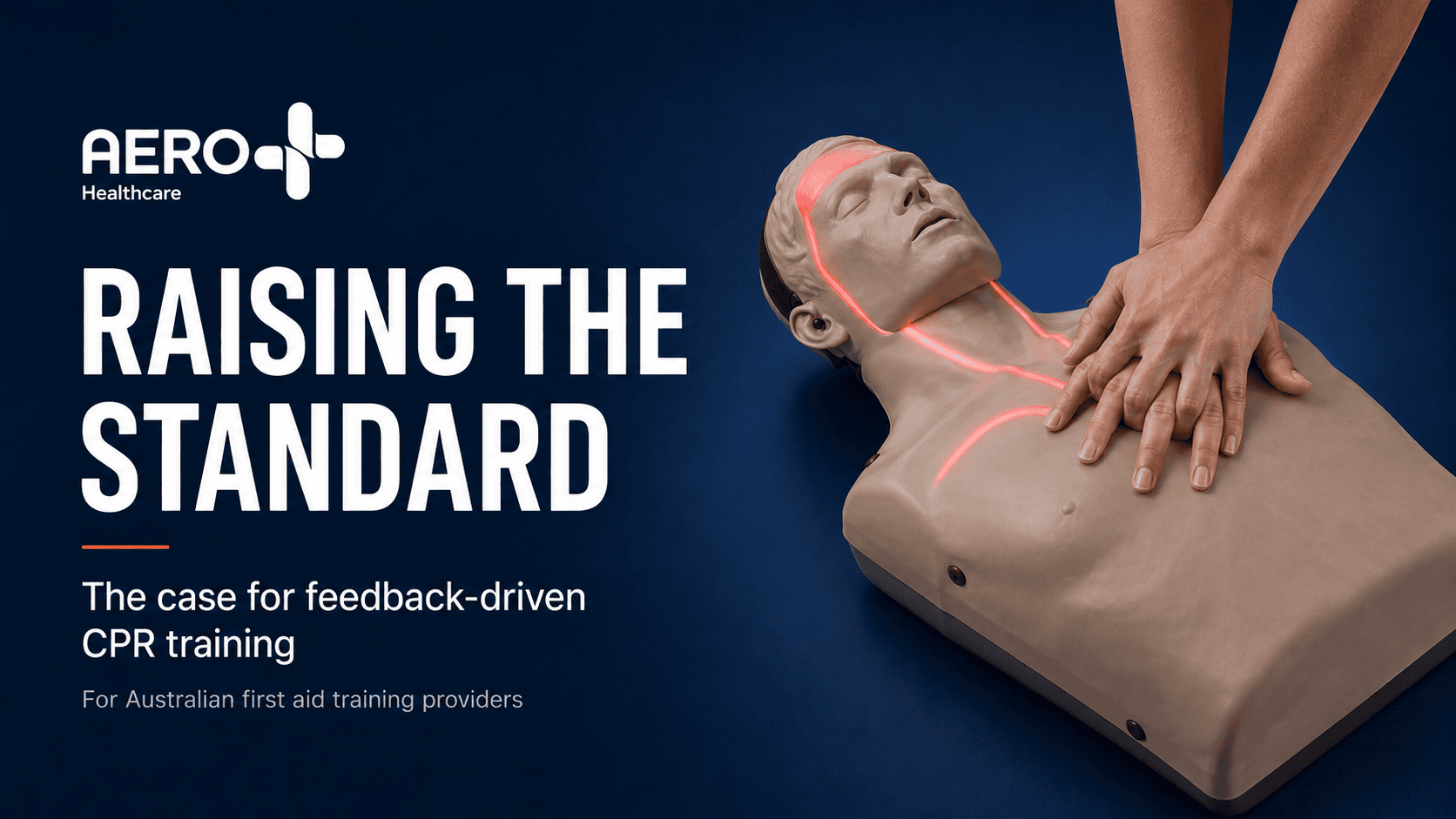
Why CPR Feedback Manikins Are Becoming the Standard in Australian First Aid Training
Course prices are under sustained pressure across Australia’s first aid training market. At the same time, Australian resuscitation guidance has moved firmly behind CPR training that uses feedback devices. For providers wanting to offer greater quality and compete less on price, that shift is worth understanding.
ANZCOR gives a strong recommendation for CPR training that pairs manikin practice with a feedback device. Feedback manikins such as the Brayden range deliver this visually, showing students blood flow reaching the brain when their compressions are effective. For Australian training providers, this gives an evidence-based reason their courses differ from a cheaper alternative.
What is a CPR feedback manikin?
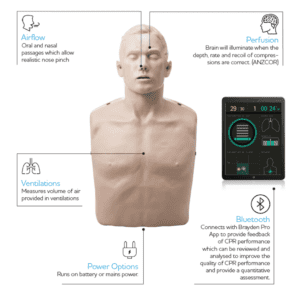
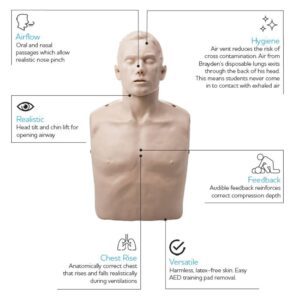
A CPR feedback manikin such as the Brayden Manikin, is a training manikin that responds to compressions as they happen, showing whether depth, rate and chest recoil meet resuscitation guidelines. Standard manikins give no such indication, so students rely entirely on the trainer’s observation.
The feedback can be audible, digital, or visual. Visual systems are the most immediate, because the student sees the result without breaking rhythm or interpreting a screen.
What does ANZCOR say about CPR feedback devices?
ANZCOR gives a strong recommendation, based on moderate-certainty evidence, for CPR training that pairs manikin practice with a feedback device. ANZCOR is the Australian and New Zealand Committee on Resuscitation, and its guidelines underpin first aid and basic life support training across the country.
Its most recent evidence review found that feedback devices improve CPR quality, including long-term skill retention. ANZCOR also suggests using devices that provide directive feedback on compression rate, depth, release and hand position during training.
For Australian providers this matters because the direction has been set locally, not imported. Providers who adopt feedback-based training early can point to the same guidelines every first aid course already answers to.
Source: ANZCOR, Guideline 10.1 – Basic Life Support (BLS) Training, approved May 2025 — anzcor.org/guideline-10-1
Why does visible feedback change how students learn CPR?
It's often difficult for students to feel the difference between adequate and excellent compressions. Trainers frequently hear the same question in each course: “am I doing it right?”
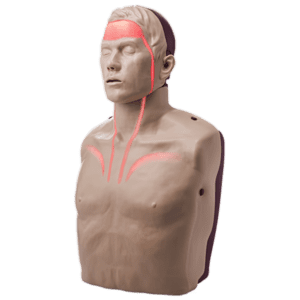
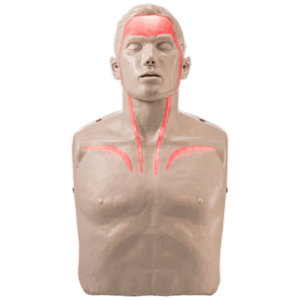
Feedback manikins answer it directly. The Brayden range responds to each compression as it happens. When depth and rate are correct, students watch illuminated indicators trace blood flow from the chest up to the brain. There is an immediate reaction to the students CPR.This enables the teacher to improve the students techniques in real time.
How does better CPR training affect a first aid business?
Better CPR training affects more than just the students retention and abilities.
A stronger value story
Courses built on current resuscitation science and guidelines can offer the surety that what is taught is backed by the latest evidence, increasing the quality of the teaching on offer.
A course students remember
The light-up moment is what students describe afterwards. The more a student can remember from a course, the better chance someone has if they ever need to use those skills in a real life emergency.
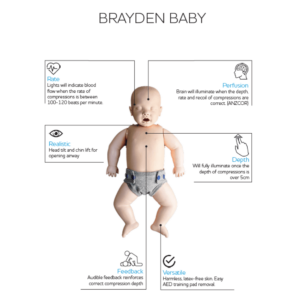
Which Brayden manikin suits your courses?
Frequently asked questions
Does ANZCOR require feedback devices in first aid courses?
No. ANZCOR recommends training that pairs manikin practice with a feedback device, and gives this a strong recommendation based on moderate-certainty evidence. It is a recommendation rather than a mandate, and it applies to training rather than to clinical resuscitation.
Do CPR feedback manikins improve skill retention?
ANZCOR’s most recent evidence review found that feedback devices improve CPR quality, including long-term retention.
What is the difference between Brayden Pulse and standard Brayden?
Brayden Pulse (IM13-R) includes the illuminated feedback system showing blood flow from the chest to the brain during compressions. Standard Brayden (IM13-S) has identical compression feel, anatomy and airway, without the lights.
How does the Brayden manikin show blood flow?
Illuminated indicators run from the chest, to the forehead. They respond to compression depth, rate and recoil, so the forehead indicator lights when compressions are effective enough to perfuse the brain.
Where can I buy CPR feedback manikins in Australia?
Aero Healthcare is the exclusive Australian importer of the Brayden range, with stock and consumables held in Australia.
Are feedback manikins suitable for high-volume HLTAID courses?
Yes. Visual feedback systems work across multiple stations without a trainer needing to monitor each student individually, which suits providers running back-to-back courses.
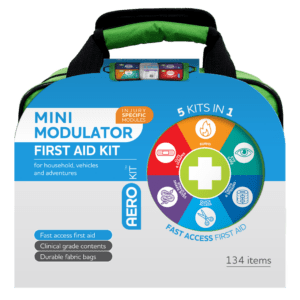 Introducing the NEW Mini Modulator - perfectly sized for taking on your next adventure!