 Defibrillators
 First Aid Kits
 Training Equipment
 Wound Care
 Pre-Hospital Emergency
 Medical Consumables
News
Unlocking AED Selection: A Buyer’s Guide to purchasing the Ideal Defibrillator
Published 07/10/2026
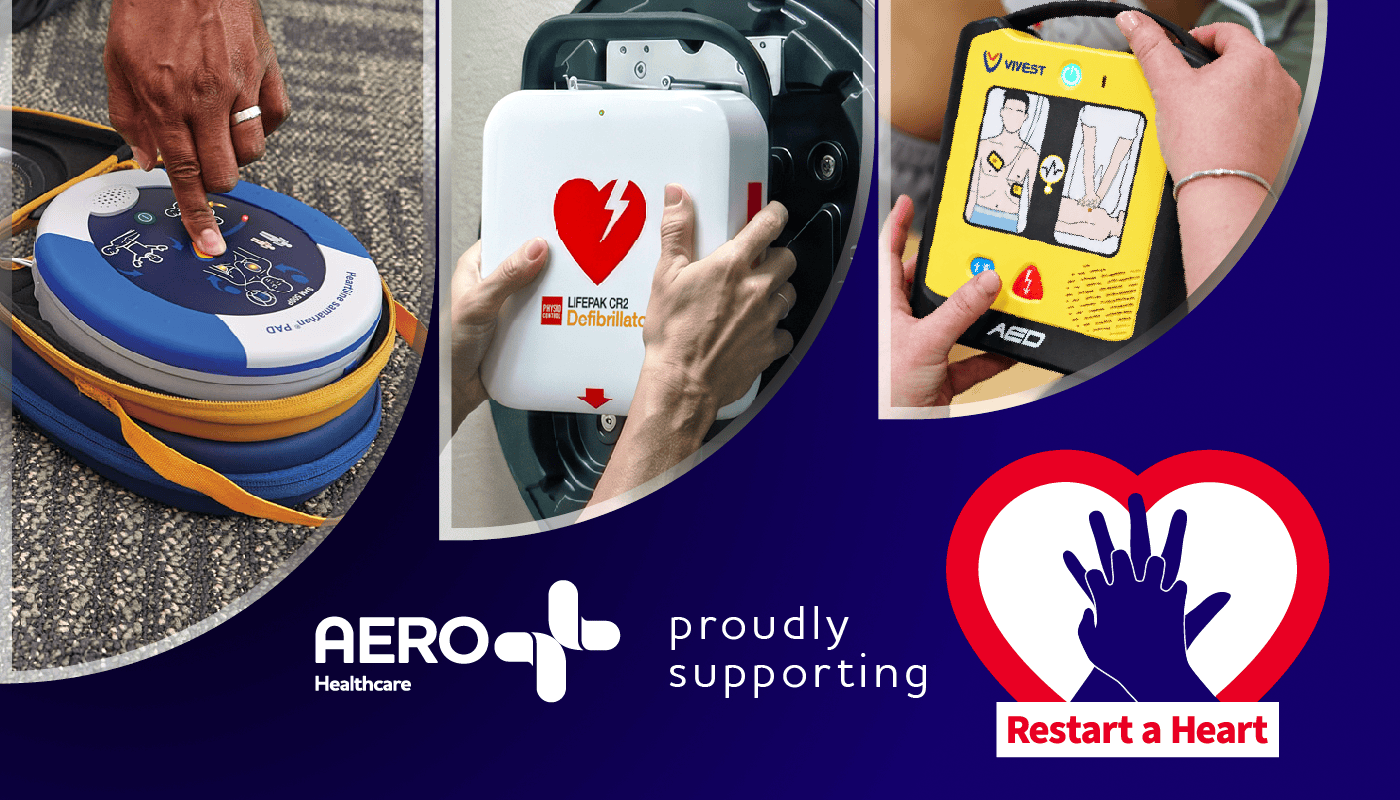
When purchasing an Automated External Defibrillator (AED) for your organisation, several critical considerations can ensure you choose the right device:
✓ Effectiveness in Restoring Heart Rhythm
The primary function of an AED is to restore normal heart rhythm during sudden cardiac arrest (SCA). Look for devices with high success rates in delivering a shock to restore a regular heartbeat.
✓ Speed and Efficiency
AEDs need to analyse the heart rhythm quickly and accurately. Faster analysis and shorter charging times can reduce the delay in delivering a shock, which is crucial in emergencies.
✓ Reliability and Consistency
The AED should perform reliably in various conditions, such as different environments and temperatures. Consistency in delivering the right therapy is essential.
✓ Accuracy in Detecting Shockable Rhythms
The device should accurately detect shockable rhythms like ventricular fibrillation (VF) or pulseless ventricular tachycardia (VT) while avoiding unnecessary shocks for non-shockable rhythms.
✓ Ease of Use Under Stress
In an emergency, users might be under stress. AEDs with clear, intuitive interfaces, voice prompts, and visual aids can assist users effectively during high-stress situations.
✓ Adaptive Technology
Some AEDs adapt their shock delivery to the patient’s specific needs, which can improve outcomes. These devices adjust the energy level and shock waveform based on the patient’s condition.
✓ Post-Event Data Retrieval
AEDs that store and provide data about the event can be valuable for medical professionals and follow-up analysis. This data can help in understanding the event and evaluating the response.
✓ Compatibility with Resuscitation Guidelines
Ensure that the AED follows the latest resuscitation guidelines provided by authoritative bodies like Resuscitation Council UK (RCUK) or the European Resuscitation Council (ERC).
✓ Intuitiveness
AEDs should be user-friendly. Look for devices with clear instructions and visual aids to guide users through the process. Training requirements for operation should also be considered.
✓ Reliability and Durability
Ensure the AED is reliable and durable. It should undergo regular self-checks to ensure readiness and functionality.
✓ Battery Life and Maintenance
Check the battery life and the ease of maintenance. Some AEDs have long-lasting batteries or self-tests that monitor battery life.
✓ Manufacturer Support and Warranty
Research the manufacturer’s reputation for customer support, warranty, and available resources for training and technical assistance.
✓ Regulatory Compliance
Ensure the AED meets all necessary regulations and guidelines in your region. Some places have specific requirements regarding AED placement, maintenance, and training.
✓ Training and Support
Adequate training for potential users is crucial. Consider whether the manufacturer provides training materials, courses, or support.
✓ Additional Features
Some AEDs come with additional features like CPR guidance, voice prompts, or real-time feedback that can enhance their effectiveness.
✓ Integration with Emergency Services
Some AEDs can alert emergency services automatically when in use. This feature might be beneficial, especially in larger business settings.
By considering these factors, you can select an AED from Aero that suits your organisation’s needs, ensuring the safety and well-being of colleagues and visitors in the event of a cardiac emergency.
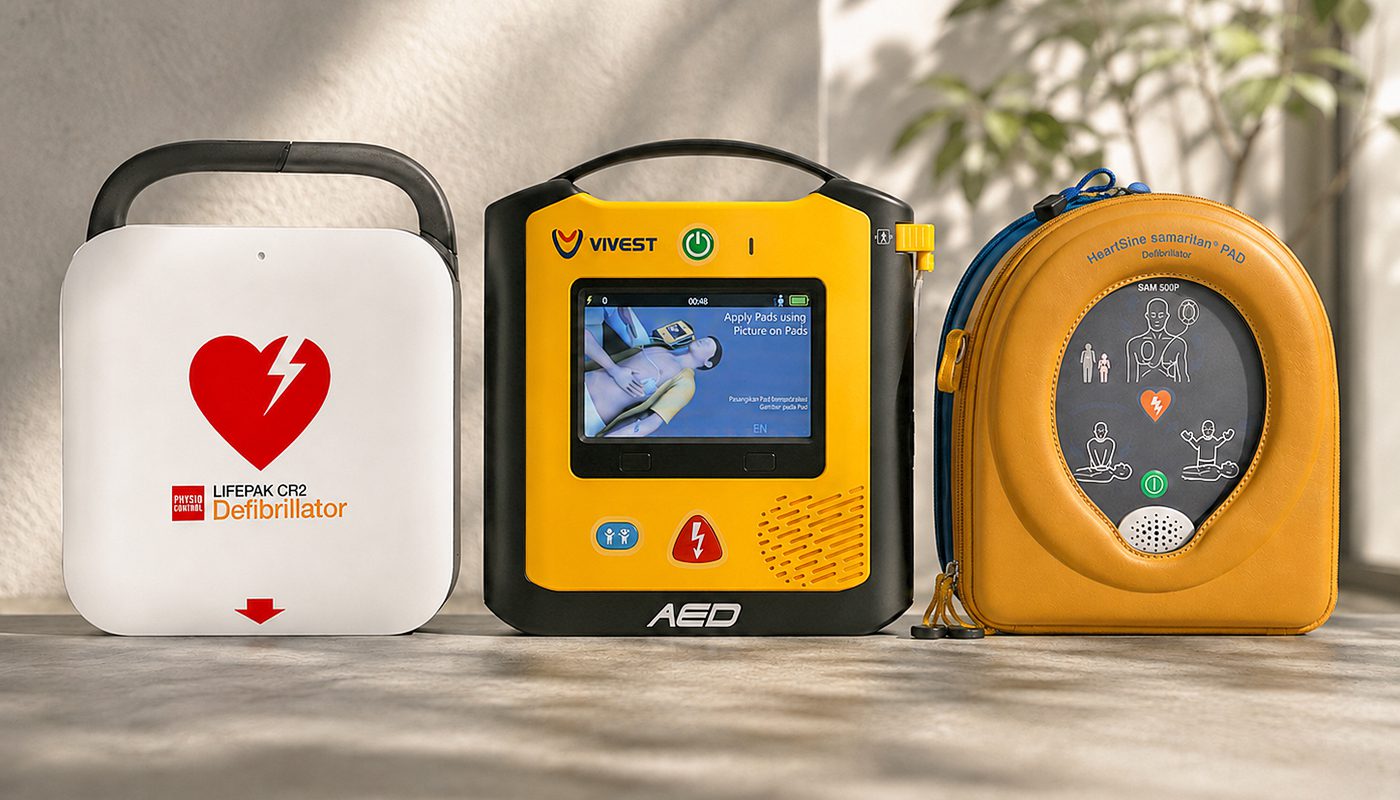
Here’s why we recommend ViVest, HeartSine® and LIFEPAK® AEDs
Choosing a defibrillator can feel like a big decision, but we’re here to help. As a primary UK supplier of HeartSine® Samaritan® and LIFEPAK® CR2 defibrillators, alongside the ViVest range, Aero Healthcare can help you find an AED that suits your setting, budget and the people who may need to use it.
Having an AED close at hand can make a vital difference during a sudden cardiac arrest. Together with calling 999, starting CPR promptly and receiving emergency medical care, early defibrillation can significantly improve someone’s chance of survival.
With clear voice prompts and visual guidance, these AEDs help rescuers follow the steps needed in an emergency. Across the range, you’ll find practical features to support ease of use, ongoing readiness and long-term value – helping you choose a suitable device with confidence.
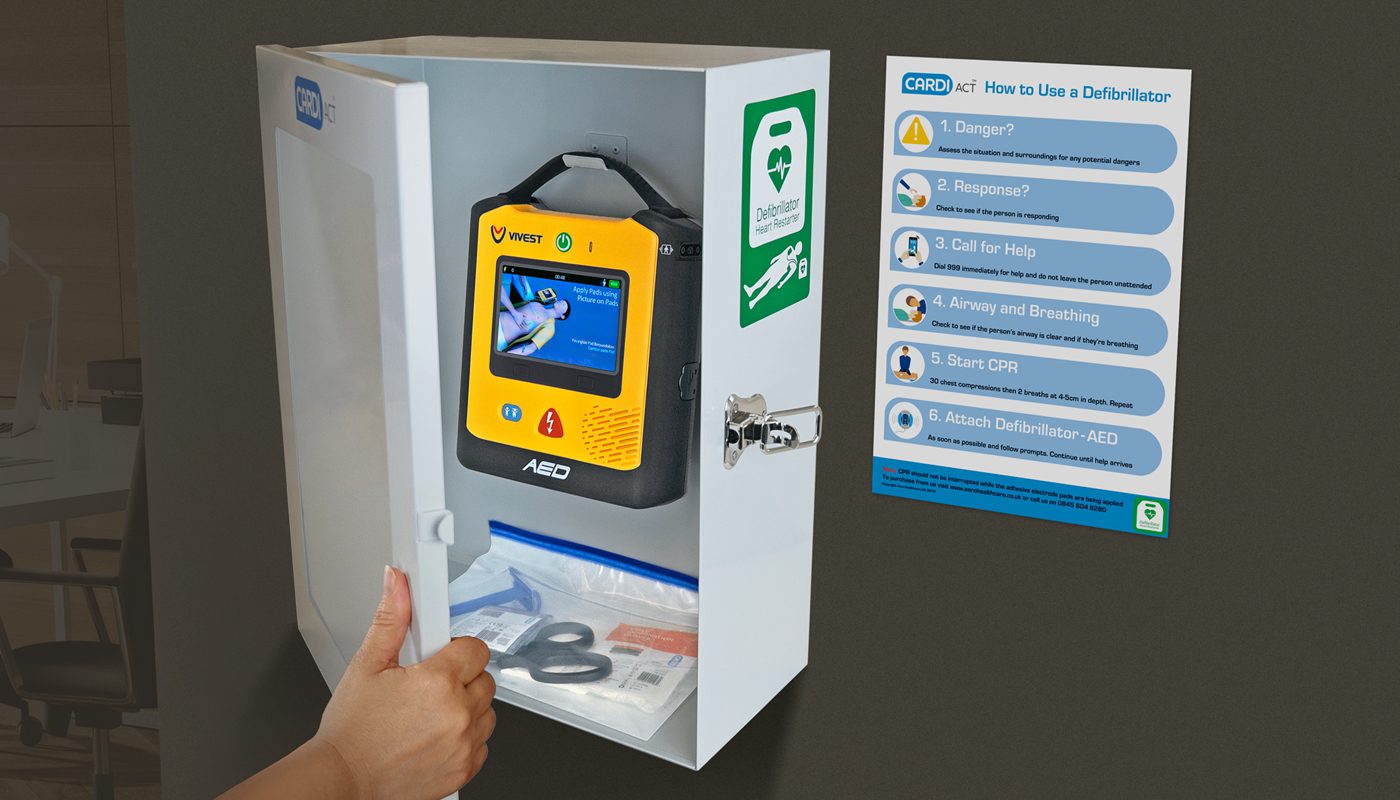
THE NEW 2-MINUTE AED RULE: How our AED Bundles help your workplace be ready to react
With the BS 8599-1:2019+A1:2026 standard now placing greater focus on AED availability, AEDs play a vital role during sudden cardiac arrest, helping improve the chances of survival when used quickly and correctly. The standard offers guidance on AED provision, placement and maintenance, helping ensure devices are accessible, visible and ready to use when needed.
To support a fast emergency response, AEDs should be accessible within two minutes – allowing one minute to locate and retrieve the device and one minute to prepare and begin treatment. Larger sites, such as warehouses, factories, golf courses and multi-building facilities, may require more than one AED to meet this response time.
Our ready-to-deploy AED bundles provide everything needed to install, prepare and use an AED with confidence from day one. Designed for workplaces, community buildings and public spaces, each bundle includes a reliable, user-friendly AED alongside essential supporting equipment, clear guidance materials and certified online training.
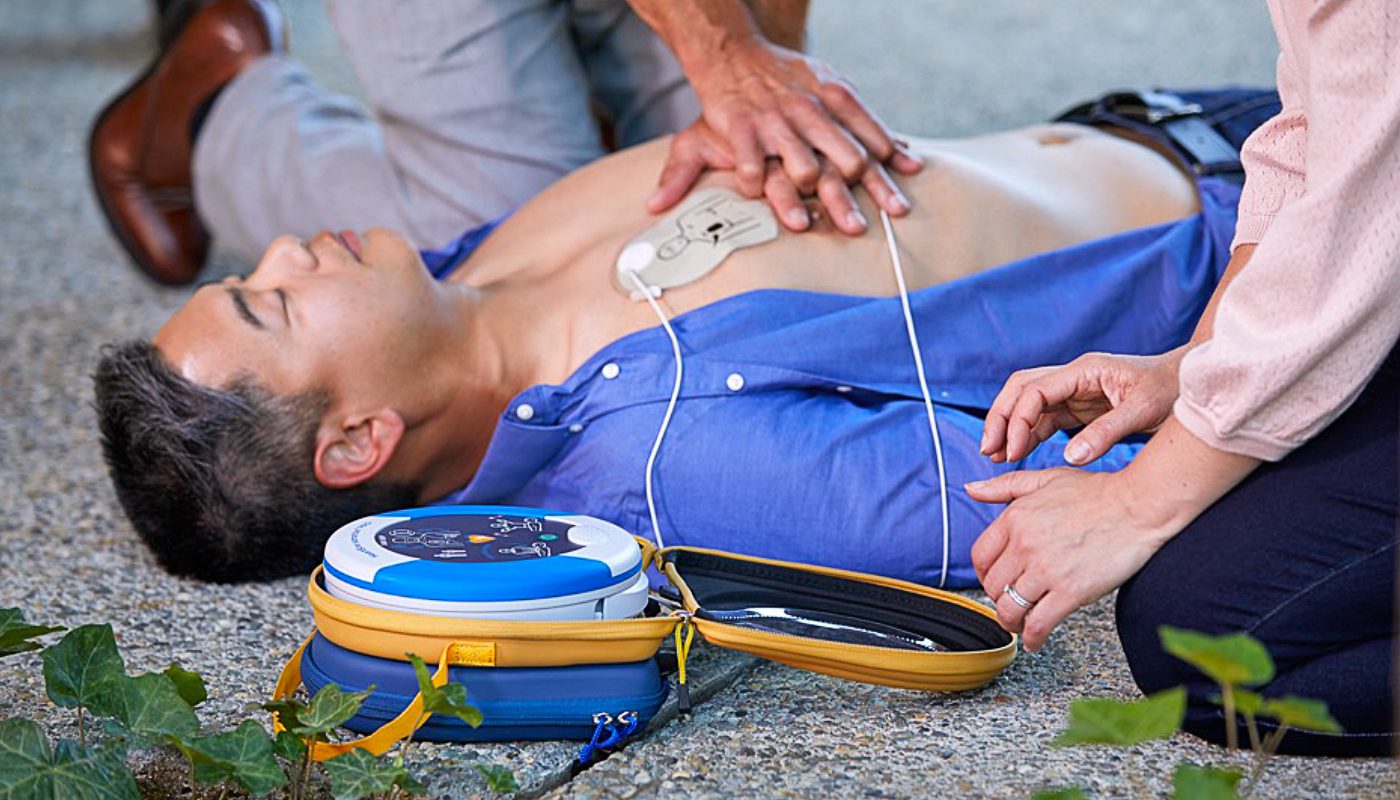
What’s the difference between a semi and fully automatic AED?
In the event of SCA, there are two types of AEDs that are available within the range of HeartSine® and Lifepak® AEDs that can determine the steps you take to respond to a cardiac emergency. Even if you don’t know the first thing about defibrillators, the type of defibrillator yourself or an organisation has can change the outcome of a cardiac emergency:
• Semi-Automatic Defibrillator
The first defibrillator option is a semi-automatic AED. The AED analyses the heart, and if a shock is warranted, the AED will say so and instruct the responder to press the shock button to deliver a shock. If the button isn’t pressed, no matter how badly the patient needs therapy, no life-saving “shock” will be delivered.
• Fully Automatic Defibrillator
The second option is a fully automatic AED (FAED). This type of AED analyses the heart, and if a shock is warranted, the AED will say so, instruct bystanders to stand back with no physical contact with the victim, and deliver a shock on its own.
When choosing an AED, think about who is likely to use it and how comfortable they may feel in an emergency. A fully automatic model delivers a shock when needed without anyone having to press a shock button, which may appeal to busy public spaces such as shopping centres, hotels and community venues. A semi-automatic model prompts the rescuer to press the shock button, which may suit teams that prefer this hands-on step. Both types guide users through the process, so either can be suitable for public spaces and workplaces.
Consult our AED Specialists about your Defibrillator needs
Contact the Aero team and a representative will support you with your purchase or any other AED related query.
Get in touchFeatured AED Solutions



Share this article